HairArchitect · Blog
Norwood Scale and Shock Loss: What Happens Month 1 to 12
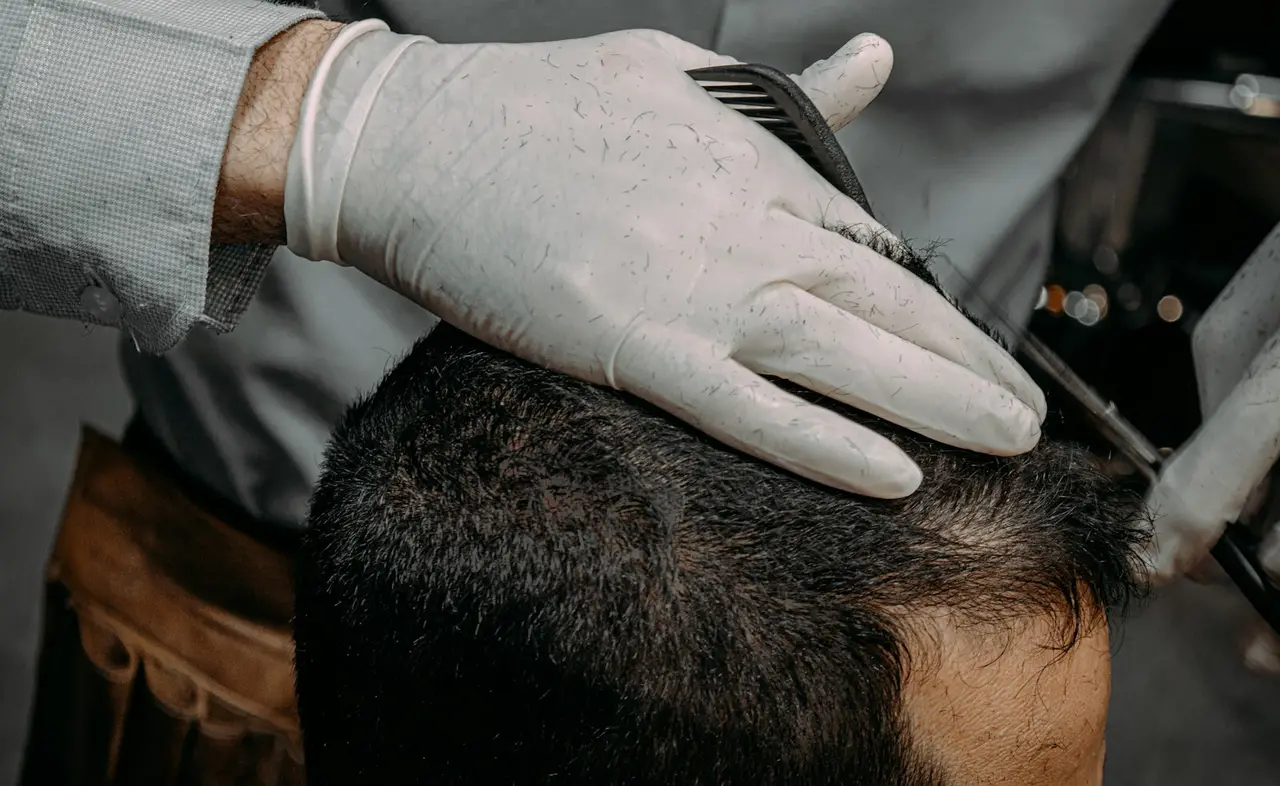
Shock loss timeline after hair transplant by Norwood stage.
Published
Written by Marcus Reyes · Medical Content Writer
TL;DR
Shock loss is a temporary shedding phase after hair transplantation; most patients see regrowth between months 3-6, with final results at 12 months, and Norwood stage influences donor supply and expectation management.
The Norwood Scale: Mapping Male Pattern Baldness
The Norwood-Hamilton classification system stages male pattern baldness from Type I minimal recession to Type VII extensive loss. First published in 1975 and updated over decades, it helps surgeons assess the extent of hair loss, plan donor harvesting, and set realistic coverage goals. The scale ranges from Type I (no significant recession) to Type VII (only a horseshoe of hair remaining at the sides and back). Understanding your Norwood stage is the first step in planning a hair transplant timeline.
- Type I-II: Minimal recession; good candidate for follicular unit extraction (FUE).
- Type III-IV: Moderate loss; often requires 1,500-2,500 grafts for frontal restoration.
- Type V-VI: Advanced loss; may need multiple sessions and careful donor management.
- Type VII: Extensive loss; donor availability limits full coverage, but density can be improved in the posterior region.
What Is Shock Loss?
Shock loss refers to the temporary shedding of existing hair, both native and transplanted, in the weeks following a hair restoration procedure. It is a well-documented physiological response to the trauma of surgery and graft placement. The shedding typically occurs within the first four weeks and is usually followed by regrowth starting around month 3.
The mechanism involves telogen effluvium, a shift of follicles into the resting phase due to surgical stress. While alarming to patients, shock loss is generally reversible, and the transplanted follicles retain their genetic resistance to balding.
Month-by-Month Recovery Timeline
- Month 1: Shock loss peaks; the scalp may look thin or patchy. This is expected and part of the healing process.
- Month 2: Shedding subsides; the scalp begins to heal. Any remaining native hair in the recipient area may appear thinner due to the shedding event.
- Month 3: Awakening phase. Fine, vellus-like hairs may become visible at the transplant sites. This is the first sign of regrowth.
- Month 4: Approximately 50% of transplanted grafts have entered active growth. Patients often notice increased density.
- Month 6: Significant improvement in coverage. Most patients see 70% of final density.
- Month 12: Final results. The majority of grafts have matured, and hair density stabilizes at the projected level.
Individual variation exists. Factors such as age, scalp biology, and postoperative care influence the speed and completeness of regrowth.
Norwood Stage Influences Expectations
A patient's Norwood stage directly affects both the number of grafts required and the likelihood of shock loss impacting the final result. Those with Norwood Type III-IV typically have sufficient donor density for a single-session procedure and experience shock loss that resolves without compromising the overall outcome. Patients with advanced stages (V-VII) may require multiple sessions spaced 9-12 months apart. In these cases, shock loss in the recipient area can temporarily reduce apparent density, but the preserved native hair in the donor zone ensures future options.
- Norwood III-IV: Single-session FUE or FUT; shock loss typically resolves by month 6.
- Norwood V-VI: Two-session approach common; first session establishes the hairline, second fills the mid-scalp.
- Norwood VII: Limited coverage goals; focus on maximizing density in the existing hair zone.
Supportive Therapies and Shock Loss Management
Some clinicians prescribe minoxidil or finasteride starting before or after surgery to maintain native hair and support the transition from shed to grown. Platelet-rich plasma (PRP) has been studied as an adjunct to improve graft survival and accelerate awakening. A 2016 systematic review found variable evidence; benefits depend on protocol and patient selection. The ISHRS patient guide emphasizes choosing a qualified surgeon as the most important factor in minimizing complications and achieving predictable results.
Patients should discuss medical therapy with their surgeon during the preoperative consultation. Over-the-counter minoxidil is commonly recommended to maintain existing hair density around the transplant sites.
When to Contact Your Surgeon
- Shedding persists beyond month 6.
- No fine hair is visible by month 4.
- Signs of infection, excessive pain, or bleeding at the donor or recipient sites.
- Unexpected scalp swelling or bruising.
Is shock loss permanent?
No. Shock loss is temporary. The majority of shed hairs regrow within 3-6 months. The transplanted follicles remain intact beneath the scalp.
Can I prevent shock loss?
Shock loss is a natural part of the healing process and cannot be entirely prevented. However, following postoperative care instructions and using minoxidil as directed may support faster regrowth.
Will shock loss affect my final result?
In most cases, no. Shock loss is temporary, and the final density depends on the number of viable grafts taken from the donor area and their successful take. Patients with advanced Norwood stages may experience a more noticeable temporary dip in density.
When can I start minoxidil after transplant?
Most surgeons recommend waiting until the recipient sites have epithelialized, typically around 2-3 weeks post-op. Follow your surgeon's specific timeline.
Does Norwood stage change after transplant?
The Norwood stage reflects your baseline hair loss pattern. A transplant does not change the genetic pattern of native hair, but it can add density that alters your visual staging. Native hair may continue to thin over time, and maintenance therapy may be needed.
How many grafts will I need for my Norwood stage?
A Norwood III-IV patient typically needs 1,500-2,500 grafts for frontal restoration. Advanced stages (V-VII) may require 2,500-4,000+ grafts across one or more sessions. A surgeon's assessment is required for an individualized plan.
Key takeaways
- Shock loss is a normal, temporary shedding phase that occurs within the first month after hair transplant surgery.
- Most patients see initial regrowth by month 3 and significant density by month 6.
- Norwood stage determines graft requirements: Type III-IV typically needs 1,500-2,500 grafts; Type V-VII may need multiple sessions.
- Maintenance therapy with minoxidil or finasteride can help preserve native hair and support overall results.
- Choose a qualified, board-certified hair restoration physician to minimize risks and achieve predictable outcomes.